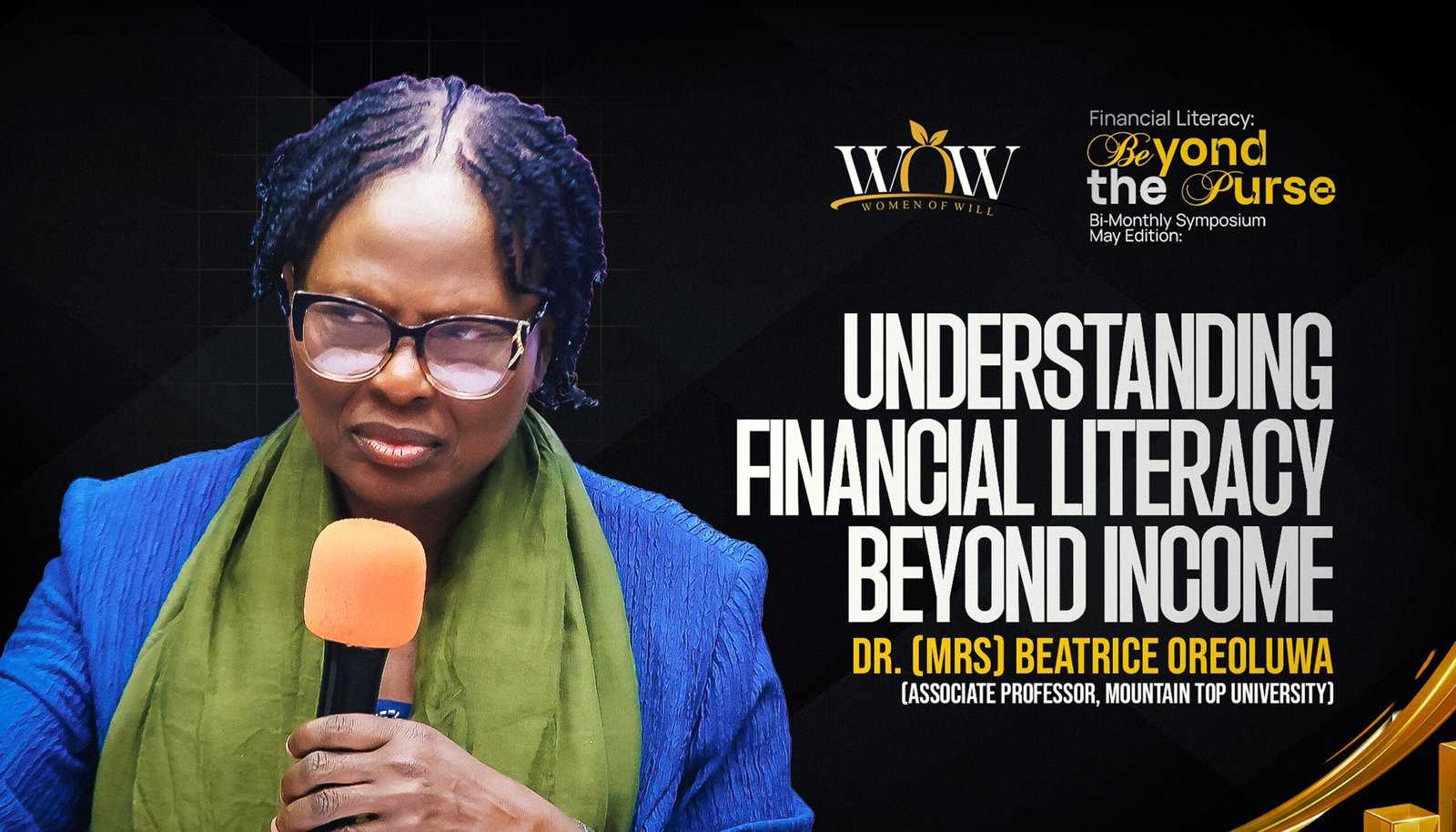
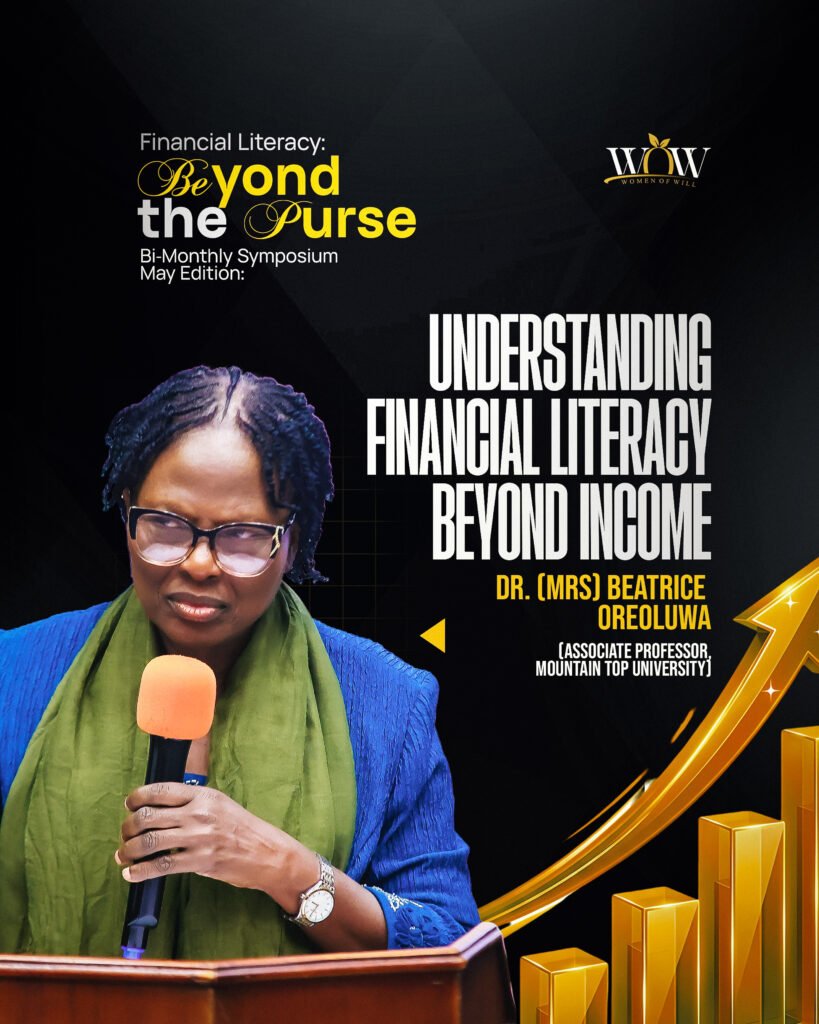
The May edition of the WOW Bi-Monthly Symposium focused on a timely and urgent theme: “Financial Literacy: Beyond the Purse.” The session featured Dr. Beatrice Oreoluwa, an Associate Professor at Mountain Top University, who delivered an insightful lecture on how financial knowledge shapes personal freedom, stability, and long-term wealth creation.
The symposium emphasized that financial literacy goes far beyond earning or saving money—it is the ability to understand and effectively apply financial skills such as budgeting, saving, investing, insurance, and debt management in everyday life.
Understanding Financial Literacy Beyond Income
Dr. Oreoluwa highlighted that financial literacy is not just about income (“the purse”), but about how individuals manage what they earn. Whether salary, business profit, or informal income streams, the key issue is financial discipline and informed decision-making.
She stressed that many individuals struggle financially not necessarily because they do not earn enough, but because they lack the knowledge to manage, allocate, and grow their income effectively.
Financial literacy, she explained, equips people with the tools needed to make informed financial decisions that impact not just individuals, but families, communities, and society at large.
From Informal Savings to Digital Finance
A key part of the discussion centered on the evolution of financial habits, particularly the transition from traditional informal savings systems such as Esusu and Stokvels to modern digital banking platforms.
Informal savings groups have long served as financial support systems in many communities, helping individuals save and access funds collectively. However, Dr. Oreoluwa noted that the rise of digital banking now offers safer, more efficient, and more scalable ways to save, transfer, and grow money.
She encouraged participants to embrace digital financial tools while maintaining the discipline and communal trust that informal systems promote.
Avoiding Financial Pitfalls: “Pink Taxes” and Predatory Lending
Another important focus of the symposium was consumer awareness, particularly around “pink taxes”—the hidden extra costs often placed on products targeted at women—and predatory lending practices that trap individuals in cycles of debt.
Participants were urged to critically evaluate financial offers, loans, and payment schemes that appear attractive but may have long-term negative consequences.
Dr. Oreoluwa also warned against lifestyle-driven debt, where individuals borrow to maintain appearances rather than to build assets or productive investments.
Smart Investing: Stocks, Real Estate, and Wealth Building
A key highlight of the session was beginner-friendly guidance on investing. Dr. Oreoluwa introduced investment as a means of making money work over time, rather than relying solely on active income.
She outlined accessible investment pathways for beginners, including:
- Stock market participation as a long-term wealth-building tool
- Real estate investment, even through small or incremental land purchases
- Agricultural and cooperative investments as low-barrier entry points
A suggested theme emerging from this section was:
“Building Wealth from Small Starts: A Beginner’s Guide to Smart Investing”
She emphasized that investing does not require large capital at the beginning. Instead, consistency, time, and discipline are more important.
Savings vs Investment: Understanding the Difference
One of the strongest messages from the symposium was the distinction between saving and investing. While savings provide financial security, they are often not enough to beat inflation. Investing, on the other hand, allows wealth to grow over time.
Dr. Oreoluwa encouraged participants to think in terms of long-term financial growth, noting that even small, consistent investments can compound significantly over time.
Debt: Good vs Bad
The symposium also explored debt management, distinguishing between good debt and bad debt.
Good debt was described as borrowing used to acquire productive assets—such as business equipment or property—that generate income over time. Bad debt, on the other hand, includes borrowing for consumption or luxury items that do not generate returns.
Participants were encouraged to adopt a key principle: borrow only when the return outweighs the cost.
Building Generational Wealth
A major highlight of the lecture was the concept of generational wealth. Dr. Oreoluwa emphasized that true wealth is not only about personal financial success but about what can be transferred to future generations.
She noted that many families lose wealth within one generation due to lack of structure, poor financial education, and absence of proper documentation for assets and businesses.
To address this, she recommended:
- Investing in income-generating assets
- Structuring and documenting family businesses
- Encouraging early financial education for children
- Promoting insurance as a financial safety net
Conclusion
The WOW Bi-Monthly Symposium May Edition delivered a powerful message: financial literacy is a life skill, not a luxury. From informal savings systems to modern digital banking, from avoiding predatory financial traps to building long-term investments, the session underscored the importance of knowledge, discipline, and intentional financial planning.
Ultimately, Dr. Beatrice Oreoluwa’s presentation reinforced a central idea—financial empowerment begins with understanding, grows through discipline, and is sustained through informed action.
0 Comments