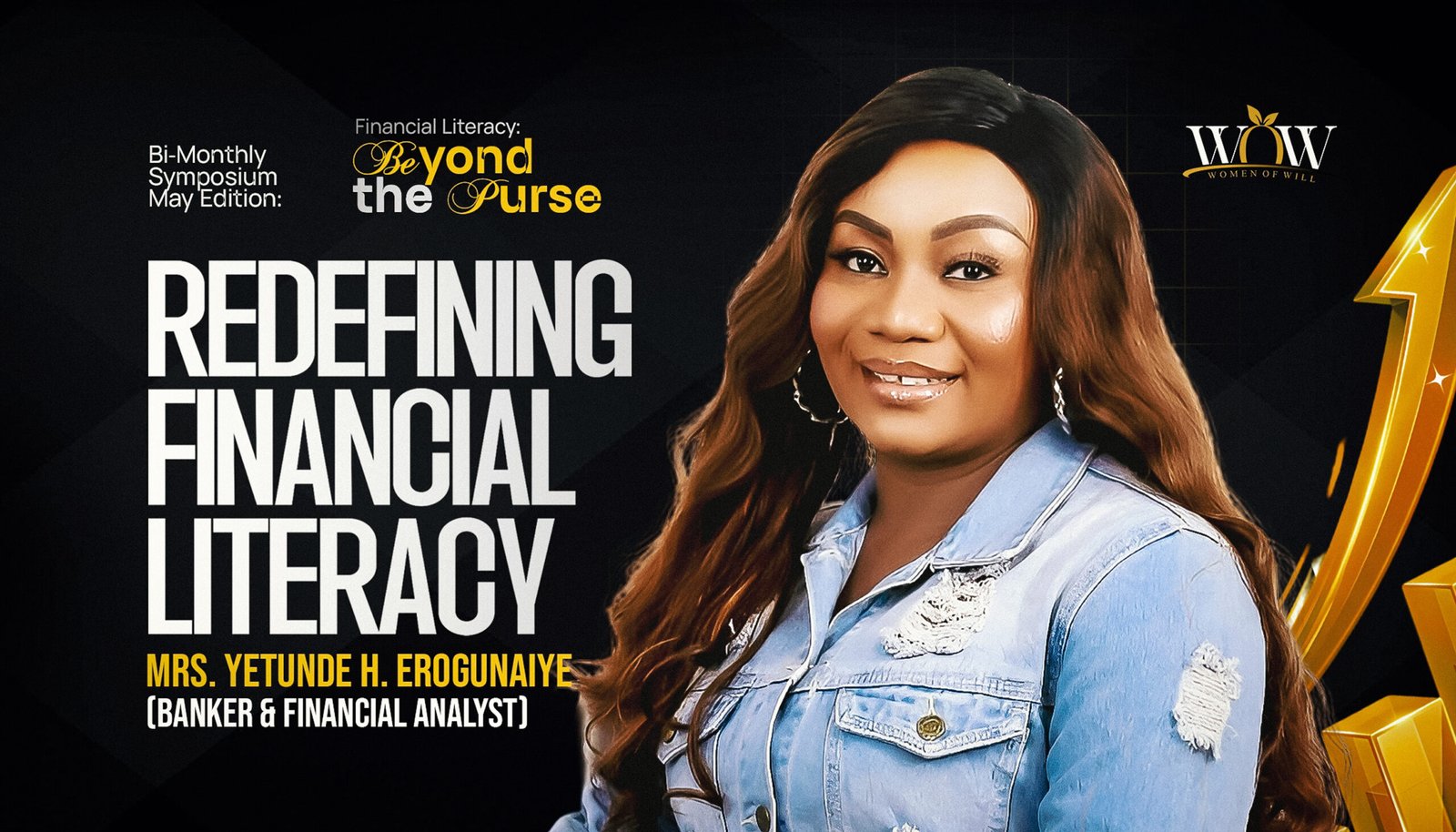
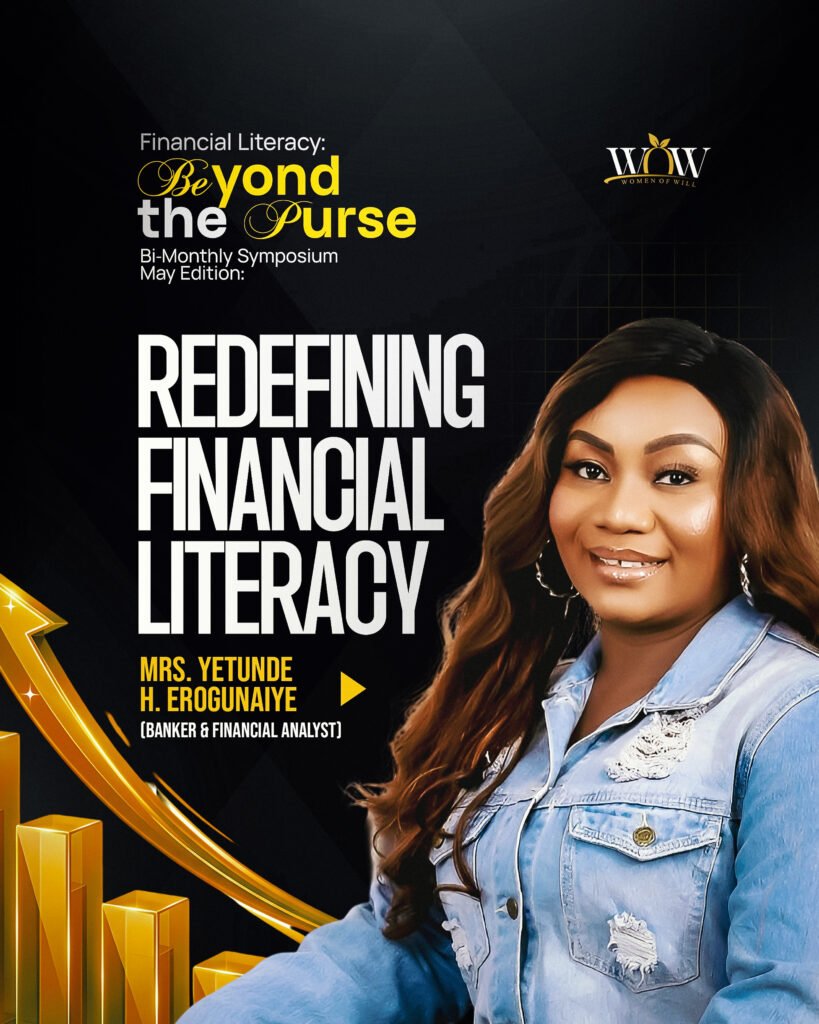
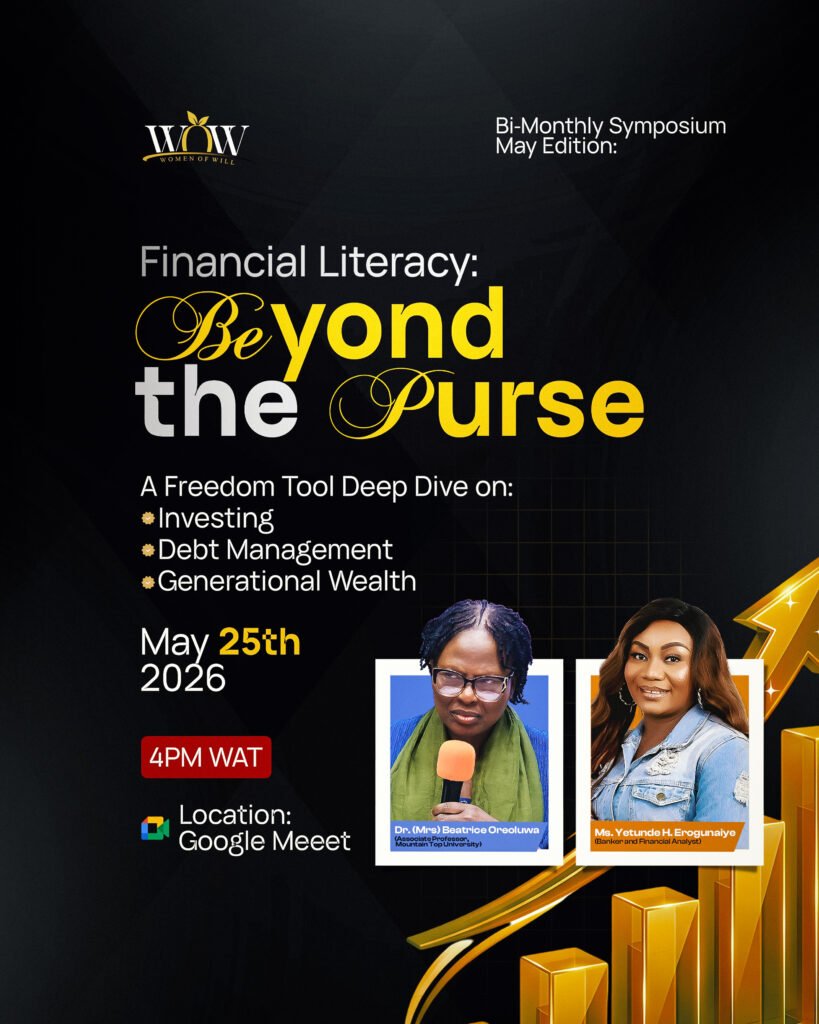
The May edition of the WOW Bi-Monthly Symposium brought together women professionals, entrepreneurs, and students for a powerful session on financial empowerment themed “Financial Literacy: Beyond the Purse.” The keynote session was delivered by Ms. Yetunde Helen Erogunaiye, a banker and financial analyst, under the topic “Freedom Tool Deep Dive: Moving from Basic Saving to Investing, Debt Management, and Generational Wealth.”
The session focused on shifting mindsets around money—from mere survival and saving—to ownership, investment, wealth creation, and legacy building.
Redefining Financial Literacy
Ms. Erogunaiye began by defining financial literacy as the ability to make informed financial decisions that create stability, opportunity, and long-term freedom. She emphasized that financial education is not just about understanding money, but about knowing how to use it intentionally to shape one’s future.
She described the concept of “beyond the purse” as a shift from survival-based thinking—where individuals simply save small amounts to meet immediate needs—to a more strategic financial mindset focused on ownership, investing, and legacy creation.
According to her, true financial empowerment is the ability to build a sustainable financial ecosystem that delivers security today and wealth for future generations.
From Saving to Investing: Understanding the Shift
A key highlight of the session was the distinction between saving and investing.
While saving preserves money, she explained that investing is what grows wealth and protects it from inflation. Without investment, money gradually loses value over time.
She stressed that investing is the “vehicle” that moves individuals from survival to wealth creation, powered by compounding returns.
However, she advised that investments should be structured carefully and diversified across different asset classes:
- Low-risk investments: Treasury bills, bonds, fixed deposits, mutual funds
- Medium to high-risk investments: Stocks, real estate, land acquisition, and business ventures
She also encouraged participants to maintain emergency funds in liquid investments that can be quickly accessed when needed.
The Power of Discipline and Reinvestment
Ms. Erogunaiye highlighted discipline as a major factor in wealth creation. She warned against the habit of withdrawing investment returns for consumption instead of reinvesting them.
Reinvesting profits, she explained, accelerates wealth growth through compounding and ensures long-term financial sustainability.
She also emphasized a golden rule: never invest in what you do not understand. Participants were encouraged to research thoroughly and consult professionals before making financial decisions, especially in complex areas such as stocks and real estate.
Debt Management: A Tool, Not a Trap
The session also explored debt management, where she explained that debt is neither entirely good nor bad—it depends on its purpose.
Debt used for business expansion, education, or income-generating activities can be productive. However, debt used to finance lifestyle or non-productive consumption can become destructive.
She encouraged participants to:
- Understand repayment timelines before borrowing
- Avoid lifestyle debt
- Seek low-interest financing options
- Maintain structured and disciplined financial planning
For entrepreneurs, she emphasized the importance of building bankable businesses with proper financial records, documentation, and structure to access funding opportunities.
Generational Wealth and Legacy Building
A major focus of the talk was generational wealth—defined as assets passed from one generation to another, creating financial security beyond a single lifetime.
She explained that building generational wealth requires intentional planning, including:
- Estate planning (wills and trusts)
- Insurance coverage
- Financial education for the next generation
- Business continuity and succession planning
She noted that wealth without structure can easily be lost, stressing that legacy is built not just through money, but through systems and knowledge transfer.
Key Takeaways from the Session
Ms. Erogunaiye summarized the core principles of financial literacy as follows:
- Budgeting is the foundation of wealth
- Debt management protects financial growth
- Investing allows money to grow over time
- Generational wealth requires planning and structure
- Financial freedom is built through discipline and consistency
She also encouraged individuals—whether students, employees, or entrepreneurs—to adopt salary discipline, including paying themselves first and allocating income intentionally.
Conclusion: Beyond Survival to Legacy
The session concluded with a strong reminder that financial literacy is not just about earning money, but about understanding how to preserve, multiply, and transfer it effectively.
As emphasized by Ms. Erogunaiye, true financial freedom is not simply having money, but having the knowledge and discipline to create opportunities and secure a lasting legacy.
The WOW Bi-Monthly Symposium – May Edition ultimately reinforced a powerful message: moving beyond the purse means moving from survival to stability, from stability to wealth, and from wealth to legacy.
0 Comments