
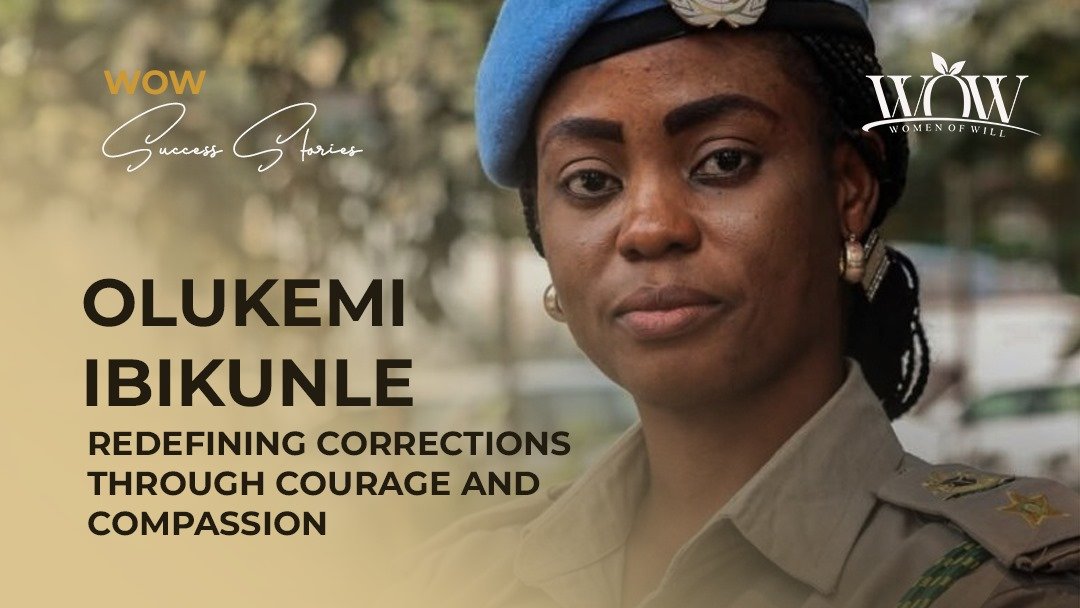
In a world where prisons are often associated with punishment rather than rehabilitation, Olukemi Ibikunle stands out as a beacon of hope, innovation, and leadership. A Chief Superintendent of Corrections with the Nigerian Correctional Service and a Corrections Unit Engineer with the United Nations Mission in the Democratic Republic of the Congo (MONUSCO), Olukemi has built a career that blends technical expertise, human rights advocacy, and visionary reform.
Her journey is not merely one of professional achievement but a story of resilience, empathy, and purpose. Working in correctional environments—often under difficult and high-risk conditions—she has demonstrated that even behind prison walls, peace and dignity can take root. Her belief that “peace begins behind prison walls” reflects her philosophy that the way society treats those in custody determines the kind of individuals it releases back into the community.
Olukemi’s success is grounded in her courage to lead and innovate in one of the most demanding fields. Her leadership has produced transformative results across several prison facilities in the Democratic Republic of the Congo. She spearheaded the design of an advanced security prison block for high-risk detainees, ensuring that even in maximum security, the principles of humane treatment and rehabilitation remain central. She also led the creation of a model prison blueprint for both male and female inmates—a design that prioritizes safety, rehabilitation, and gender-sensitive infrastructure.
Beyond architecture, her initiatives have embraced sustainability and human development. The Uvira Prison Biogas Initiative, one of her hallmark projects, transforms human waste into clean energy. This innovation not only improves sanitation and reduces environmental impact but also empowers inmates with technical skills and responsibility. Similarly, her food security programmes in Luzumu and Kabare prisons address malnutrition and promote self-sufficiency, teaching inmates agricultural and entrepreneurial skills that aid reintegration after release.
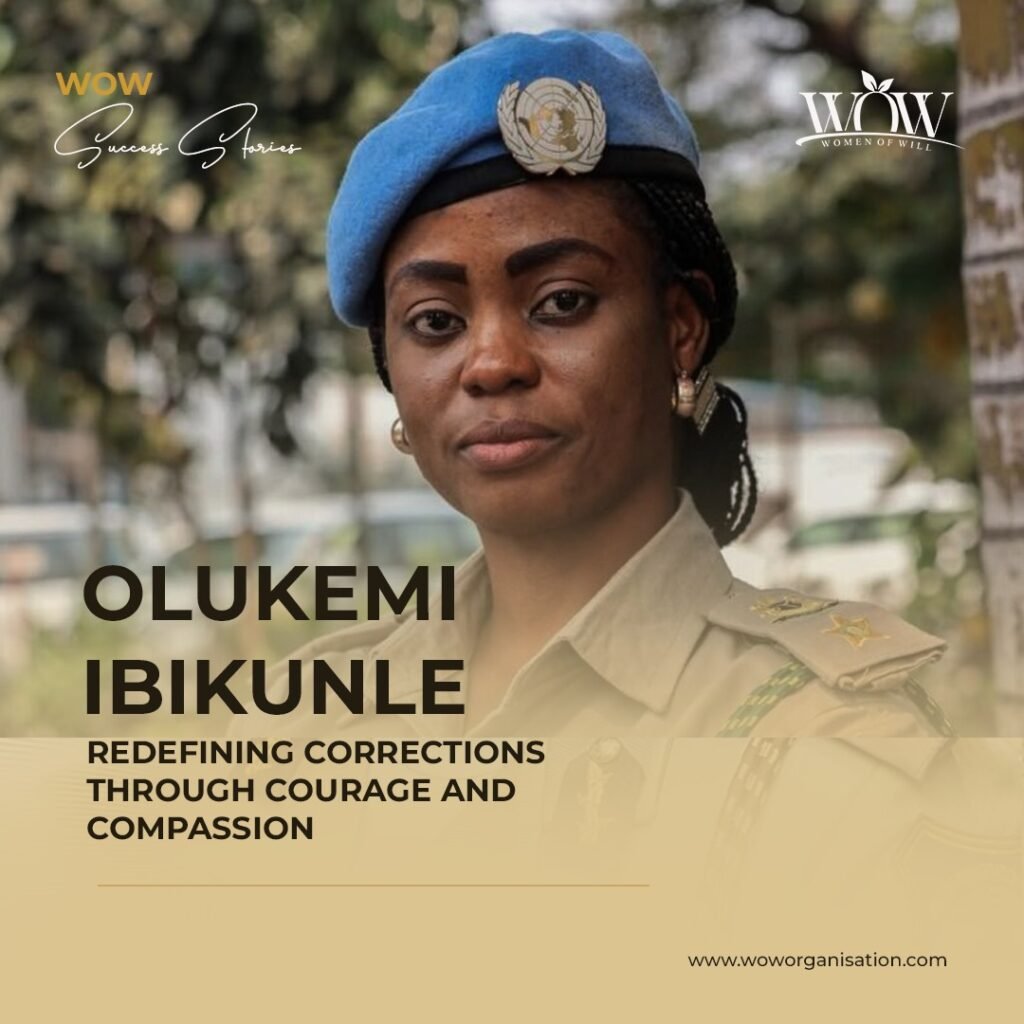
Olukemi’s commitment to reform goes hand in hand with her personal dedication to understanding the people and cultures she serves. While working in the DRC, she learned French and Swahili to better communicate with inmates, colleagues, and local communities—an act of humility and cultural sensitivity that strengthened her leadership and impact.
Her remarkable contributions have earned her global recognition. In 2025, she received the United Nations Trailblazer Award for Women Justice and Corrections Officers—one of the most prestigious honors given by the UN Department of Peace Operations. This award celebrates her exceptional leadership, innovation, and unwavering commitment to humane corrections and justice reform.
But Olukemi’s story transcends accolades. It is a powerful reminder that success is not just about personal advancement—it is about transforming systems, inspiring others, and bringing dignity to spaces often forgotten. Her work is helping to reshape how societies think about prisons: from places of despair to places of hope, learning, and restoration.
For many young women and professionals across Africa, Olukemi Ibikunle’s story is an inspiration—a testament to what is possible when knowledge meets empathy, and when leadership is guided by purpose. Her legacy continues to grow, not just in the institutions she has reformed, but in the lives of those whose futures she has helped to rebuild.
0 Comments